

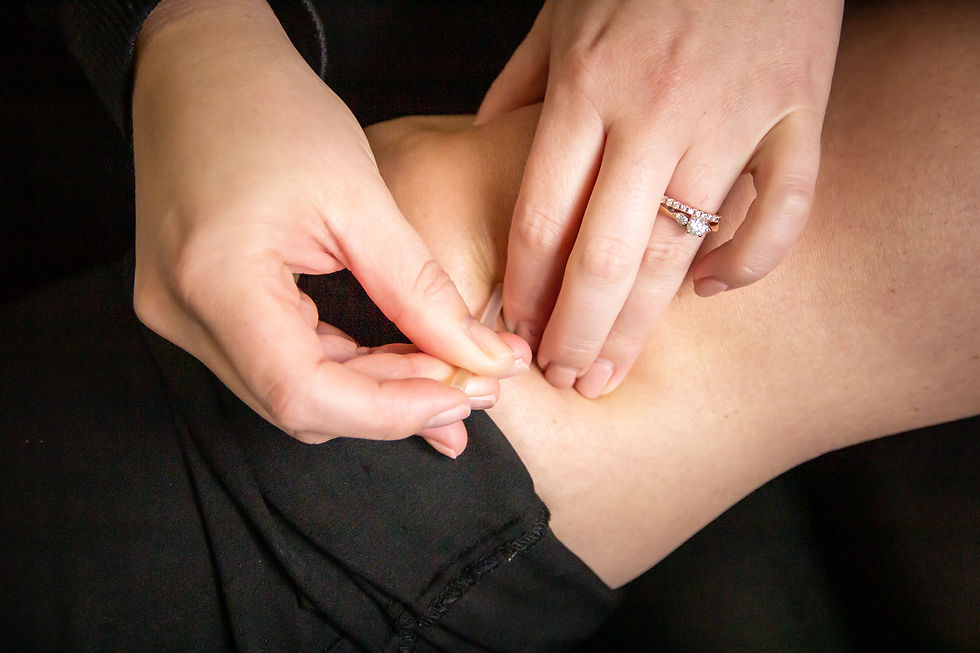
What Is Dry Needling?
Dry needling is a technique used by physical therapists to treat pain and movement limitations by targeting tight or irritated tissue in the body. Dry needling can be performed on muscles, ligaments, tendons and bones.
It focuses on trigger points, which are small areas of tightness within a muscle that can cause pain, restrict movement, or refer discomfort to other parts of the body. It also can be used to stimulate a faster healing response in areas with scar tissue.
Using a thin, sterile needle, your therapist can reach these areas more precisely than with hands alone, helping release tension and improve muscle function.
How It Works
When a trigger point is stimulated with a needle, it can help the muscle relax, reduce pain, and improve range of motion.
This process helps restore normal muscle function and can lead to better movement and less discomfort over time.
Dry needling is often used alongside other physical therapy techniques to support longer-lasting results such as IASTM, cupping and/or electrical stimulation.

What Dry Needling Can Help With
Dry needling may be beneficial for:
Muscle tightness or stiffness
Chronic pain
Trigger points or localized pain
Limited mobility or range of motion
Headaches
Scar Tissue
.jpg)
Is Dry Needling the Same as Acupuncture?
Dry needling is different from acupuncture. While both use thin needles, dry needling is based on modern Western medicine and focuses on treating muscle and movement dysfunction, specifically targeting tight or irritated areas within the muscle. Acupuncture, on the other hand, is rooted in traditional Chinese medicine and follows a different philosophy and treatment approach.
Safe, Skilled Treatment
Dry needling is performed by physical therapists who have completed specialized training and education to safely and effectively use this technique. Your therapist will walk you through the process, answer any questions you may have, and make sure you feel comfortable and informed throughout your session. Following Dry Needling sessions, you may experience mild muscle soreness, small bruises and/or bruising. It is important to hydrate, stretch and perform gentle movement following dry needling to continue to facilitate increased blood flow to the area for healing.
.jpg)
